
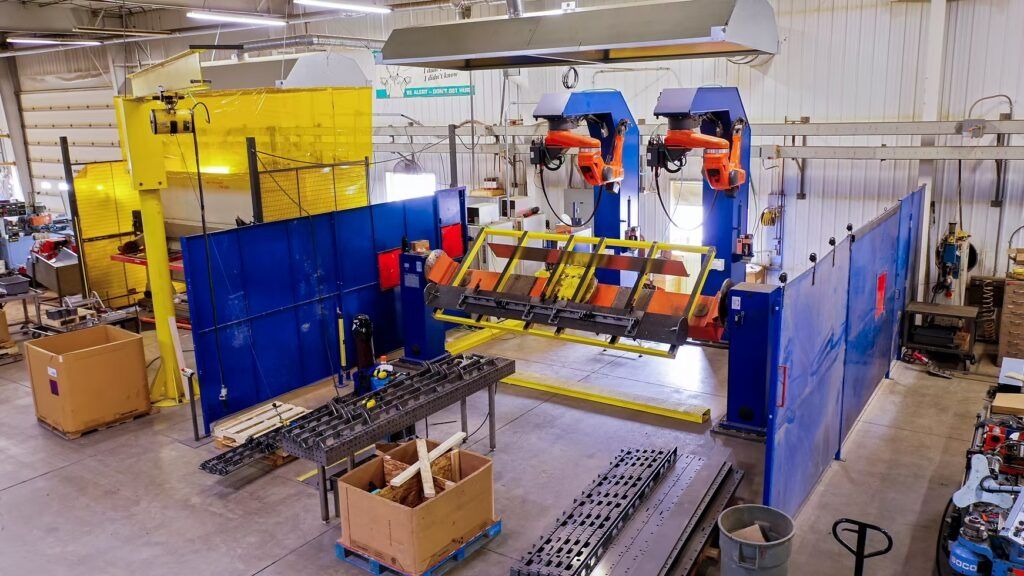
Starland Metals bought one used CLOOS robot online and now runs 98% on automation.
Starland Metals, a Minnesota job shop, started in 2020 with one pre-owned CLOOS robot found online. About 98% of its production now runs on automation, output roughly doubled without growing the labor force, and the shop standardized on CLOOS after the first system paid off.
CLOOS supplied help with setup, programming and maintenance anyway, and the first system paid off right away. Brothers Colin and Jadon Decker then standardized on CLOOS for the systems that followed, which made each next one easier.
Output roughly doubled without growing the labor force. The Deckers say email queries to CLOOS come back within the hour, and after frustrating troubleshooting with other vendors they wanted one company to call. Most of the robots on their floor are CLOOS today.
In CLOOS’s 2025 North American Welding Automation Research Study, 58.8% of manufacturers take a “start small and expand” approach instead of going after a complex solution on day one. Starland’s first system was a single pre-owned CLOOS robot found online in 2020.
Frequently asked questions
What specific factors determined Starland Metals' success with their initial used welding robot purchase?
Starland Metals' success with their first used welding robot hinged on several key factors. They focused on a specific, repeatable part that the robot was suited for, ensuring immediate utility. Crucially, they received ongoing support from the vendor, CLOOS, for setup, programming, and maintenance, even with a pre-owned system. This positive initial experience, where the robot paid for itself quickly, made subsequent automation decisions easier for the company.
Beyond the initial purchase, how did Starland Metals scale their automation to reach 98% of production?
After the initial success with their first used robot, Starland Metals scaled their automation by standardizing on CLOOS systems for subsequent purchases. Their decisions were driven by practical considerations: reliable equipment, direct service from CLOOS, and responsive support. They aimed for a single vendor for accountability after encountering frustrations with other suppliers. This strategy of building on successful projects led to nearly their entire production running on automation.
What is the most crucial consideration when evaluating a used welding robot for purchase, according to the provided information?
The most crucial consideration when evaluating a used welding robot is the support available behind the system. A used robot's utility is directly tied to the help provided for its installation, programming, and ongoing maintenance. It is vital to ascertain who will service the machine, how rapidly they respond to issues, and if they will provide support for a system they did not initially sell. This ensures the investment remains functional and productive.
If a used welding robot is being considered, what are the key technical aspects regarding its past usage and condition that require thorough investigation before making a decision?
Before committing to a used welding robot, a thorough investigation into its work history and condition is paramount. Engineers should inquire about what the robot was used for and for how long, as this indicates potential wear patterns. It's important to understand if the machine was merely overhauled or completely rebuilt, with specific details on who performed the work and what was done. Additionally, confirming the continued availability of necessary parts and software for older systems is critical for long-term operational viability.
What percentage of manufacturers, according to research cited in the article, tend to adopt a 'start small and expand' strategy for automation?
According to the CLOOS 2025 North American Welding Automation Research Study mentioned in the article, 58.8% of manufacturers prefer to take a 'start small and expand' approach rather than immediately pursuing a complex, large-scale automation solution from the outset. This approach aligns with the practical constraints faced by many job shops, including limited capital and a lack of dedicated automation engineering staff.
How much did Starland Metals report their output roughly increased after implementing automation, and what was the impact on their workforce?
Starland Metals reported that their output roughly doubled after they implemented welding automation. This significant increase in production was achieved without any growth in their labor force. Furthermore, the adoption of automation led to a reduction in manual strain on their skilled welders, contributing to lower turnover rates among these valuable employees.
Get the long read at Cloos North America
Is this your company?
This article features your business. Claim it to add your logo, contact details, and a link to your website — or upgrade to reach more buyers.
Did you know 80% of Press Releases trigger AI content warnings? Reach out and the M4S team can assist.