
Position Automation cut a UK aluminium sub-assembly maker's lead time by over 40%.
A UK manufacturer of architectural aluminium sub-assemblies replaced separate saws, drill presses and staged punch-notching with one integrated line after Value Stream Mapping showed less than 45 minutes of active processing in an 8-day lead time. Production lead time fell by over 40% and shop-floor WIP buffer inventory by 60%.
A disconnected saw, drill and punch layout became a single-pass line, cutting shop-floor WIP by 60%.
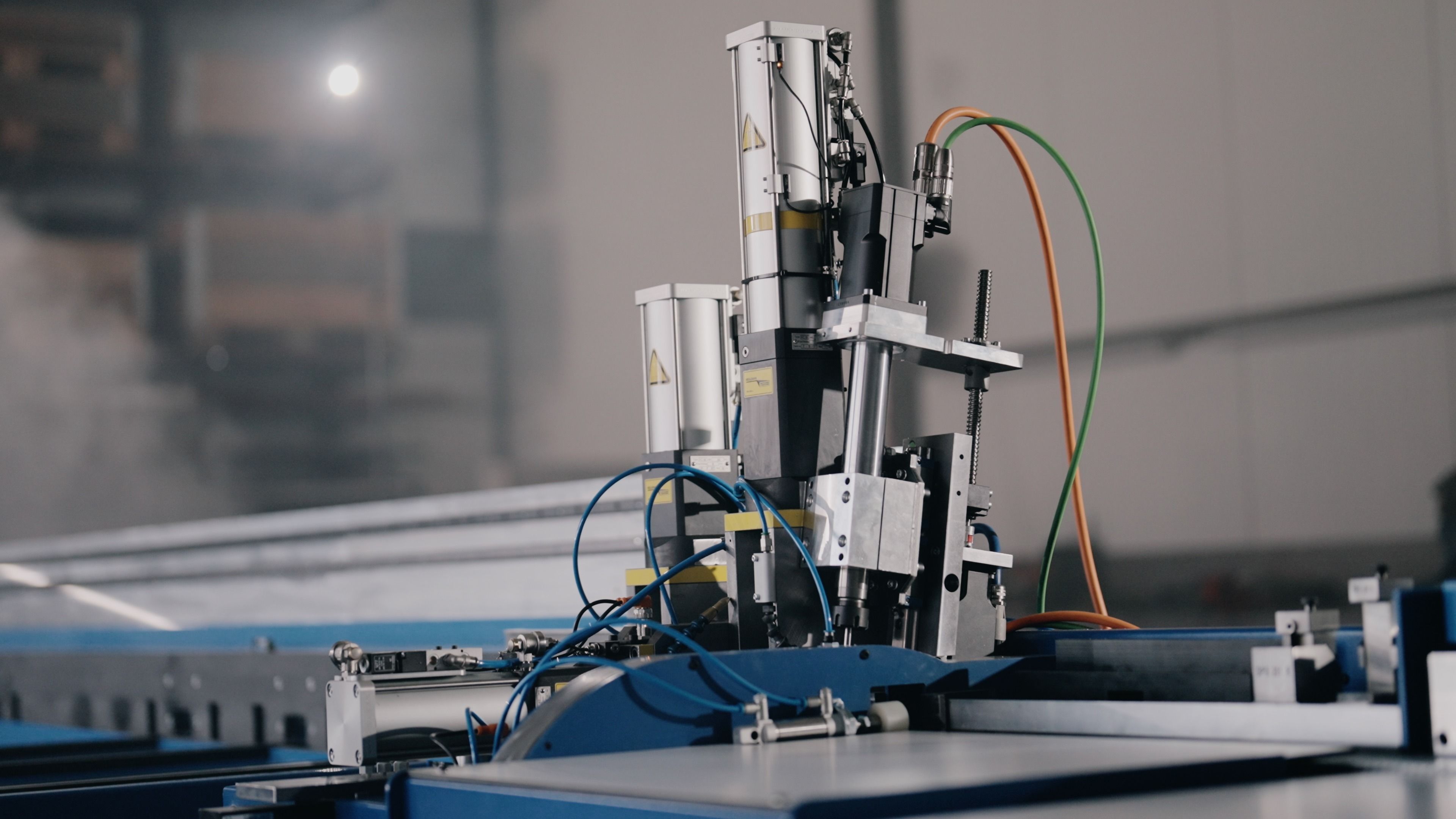
Value Stream Mapping found active processing of less than 45 minutes inside an 8-day lead time. Position Automation replaced separate saws, drill presses and staged punch-notching with one integrated processing line. Its team maps takt time, cycle intervals and material paths to consolidate fragmented operations into linear, balanced automation cells.
The result was over 40% lower production lead time and 60% less WIP buffer inventory. Forklift and manual handling transport across the bay was eliminated, and reclaimed floor space let the client install a new assembly line without facility expansion.
Frequently asked questions
How can identifying non-value-adding delays in material handling improve manufacturing plant capacity and reduce work-in-progress capital?
Non-value-adding delays, such as materials waiting on pallets or in queues, represent hidden friction that caps plant capacity and inflates work-in-progress (WIP) capital. By using Value Stream Mapping (VSM) to identify these floor-level wastes and engineering automated layouts that restore continuous flow, manufacturers can mitigate these inefficiencies. This process streamlines material movement and reduces the time spent waiting, directly contributing to increased throughput and lower inventory investment.
What specific metrics does Position Automation's engineering team consider when consolidating fragmented operations into linear, balanced automation cells?
Position Automation's engineering team maps critical operational metrics to consolidate fragmented processes into balanced automation cells. These metrics include the manufacturing takt time, which is the rate at which products must be completed to meet customer demand, and the cycle intervals of individual operations. They also analyze material paths to ensure efficient and linear movement, integrating automated loading, synchronized conveyors, and multi-operation machining heads to create compact, flow-oriented layouts that eliminate the need for inter-stage buffers.
What are the primary advantages of Position Automation's approach to factory layout design over traditional functional grouping?
Position Automation's approach contrasts with traditional factory layouts that group machinery by function. Instead of having separate areas for saws, drills, or deburring, Position Automation designs integrated, linear automation cells. This consolidation eliminates extensive material transport between departments, reduces handling damage, and minimizes intermediate buffer inventories. The result is a streamlined, single-pass processing line that significantly slashes lead times and WIP, while also reclaiming valuable floor space.
What was the impact of Position Automation's VSM analysis and subsequent layout redesign on a UK manufacturer's production lead time and WIP?
Following VSM analysis, a UK manufacturer producing architectural aluminium sub-assemblies saw significant improvements. Total production lead time fell by over 40%, and shop-floor WIP buffer inventory was reduced by 60%. Forklift and manual handling transport across the bay were completely eliminated. The reclaimed floor space even allowed the client to install a new assembly line without the need for facility expansion.
How does Value Stream Mapping (VSM) help identify waste in manufacturing processes?
Value Stream Mapping is a lean visual tool that meticulously documents every single material handling step, processing time, and idle queue from raw stock delivery to finished component dispatch. By visualizing the entire flow, VSM clearly highlights where materials are waiting, being transported unnecessarily, or undergoing non-value-adding activities. This detailed mapping process allows engineers to pinpoint specific areas of inefficiency that are capping plant capacity and inflating work-in-progress capital.
What is the core principle behind Position Automation's engineering strategy for factory layouts?
The core principle behind Position Automation's engineering strategy is designing for flow over footprint. They view machinery not as standalone islands but as integrated components within a system. By meticulously mapping takt time, cycle intervals, and material paths, their team consolidates fragmented operations into linear, balanced automation cells. This design philosophy prioritizes continuous movement and the elimination of unnecessary delays, thereby maximizing efficiency and minimizing wasted resources.
Get the long read at Position Automation
Is this your company?
This article features your business. Claim it to add your logo, contact details, and a link to your website — or upgrade to reach more buyers.
Did you know 80% of Press Releases trigger AI content warnings? Reach out and the M4S team can assist.